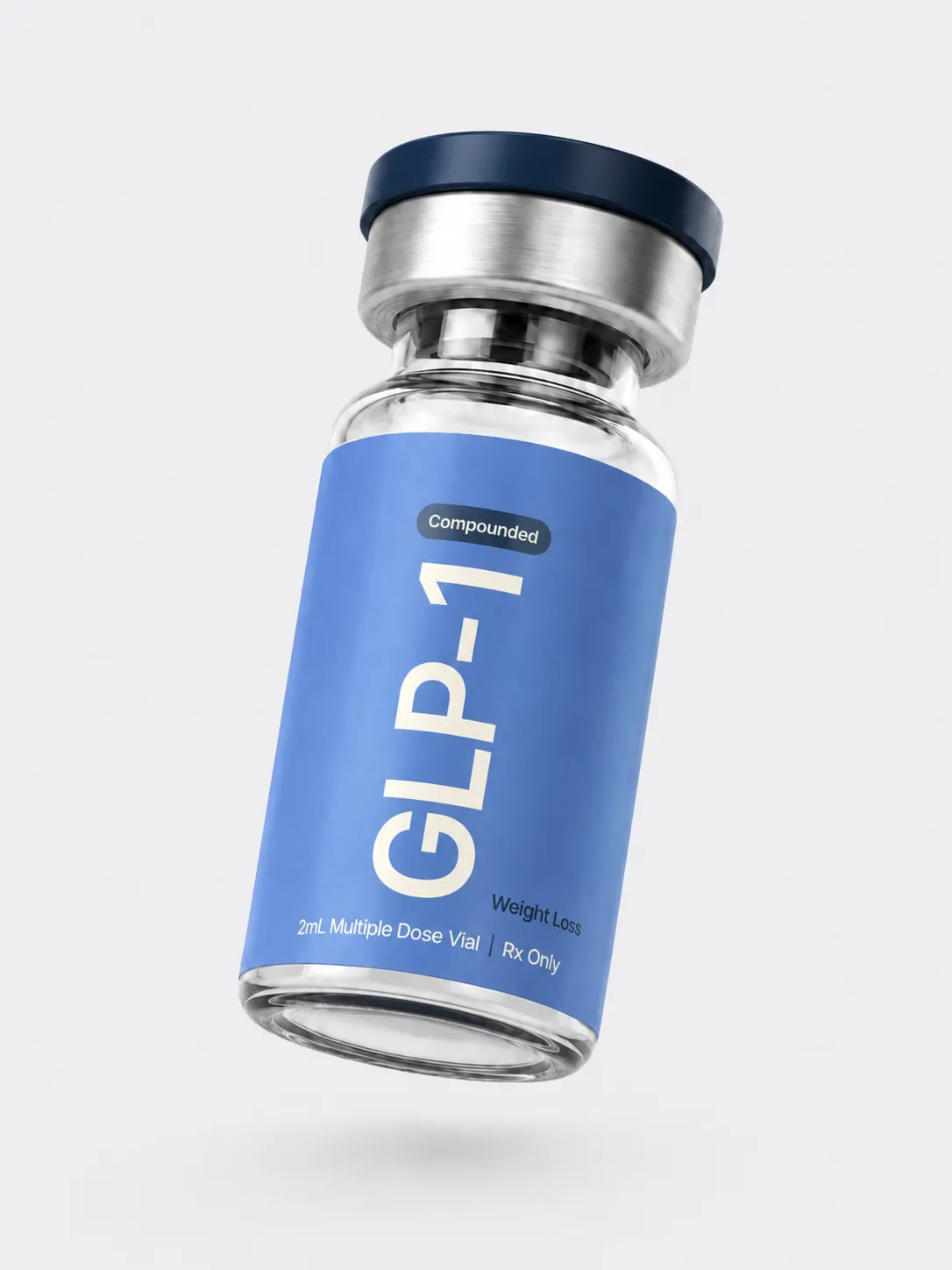
- Does adding B12 make GLP-1 work better?
- Why are vitamins included?
- Should everyone receive the same combination?
The answer to these questions is more personalized than many people expect.
Why Are Vitamins Sometimes Included?
One of the most common questions providers receive is why some compounded formulations include vitamin B12 or vitamin B6.
Different providers may include these vitamins for different clinical philosophies, patient populations, and formulation preferences.
Some providers choose formulations that include vitamin B6 and vitamin B12 as part of a broader approach to supporting the overall treatment experience.
At Chime Health, some treatment options are paired with vitamins B6 and B12 because we believe your experience throughout treatment matters.
Our goal is to provide thoughtfully designed formulations that support patients as they begin and continue their journey. While every person responds differently to treatment and no formulation can eliminate side effects or guarantee a particular experience, our providers consider the complete patient journey when selecting treatment options.
That philosophy influences everything we do.
What Do Vitamin B12 and Vitamin B6 Do?
Vitamin B12 plays an essential role in several normal body functions, including:
- Normal energy metabolism
- Healthy red blood cell formation
- Nervous system function
- DNA synthesis
Vitamin B6 supports several important functions, including:
- Normal protein metabolism
- Nervous system function
- Immune health
- The production of important neurotransmitters
These vitamins are important nutrients that help support normal body functions. Vitamin B12 is required for healthy red blood cell formation, central nervous system function, and DNA synthesis, while vitamin B6 is involved in more than 100 enzyme reactions, mostly related to protein metabolism.
However, they should not be viewed as weight-loss medications on their own, nor should they be considered a guarantee of fewer side effects or better weight-loss results.
Why Doesn’t Every Provider Use the Same Formula?
Healthcare should never be one-size-fits-all. Every provider has a distinct clinical philosophy. Every patient has a unique health history. Every weight-loss journey is different.
Some patients may benefit from one formulation, while another person may require something entirely different.
Responsible telehealth is about finding the treatment option that makes the most sense for you after an appropriate medical review.
Your Journey Starts Before the Prescription
One of the biggest misconceptions about medical weight loss is that success starts with choosing the right medication.
At Chime Health, we believe it starts much earlier.
It starts by understanding:
- Your goals
- Your previous weight-loss experience
- What has and has not worked for you
- Whether you have used GLP-1 medications before
- The kind of support you are looking for
- How you want to feel, not just what you want to weigh
That is why every Chime journey begins with the Chime Path Assessment™.
Rather than directing everyone toward the same treatment, the assessment helps identify the pathway that best aligns with your goals, whether that is weight loss, GLP-1 support, health insights, energy and wellness, or another personalized care experience.
If you decide to continue, you will complete a medical intake, and a licensed provider will review your information before determining whether prescription treatment is medically appropriate.
Personalized Care Means Personalized Decisions
Not everyone will receive the same recommendation.
Not everyone needs the same formulation.
Not everyone will have the same experience.
That is exactly how responsible healthcare should work.
At Chime Health, we believe successful weight management is not simply about prescribing medication. It is about creating a thoughtful, provider-guided experience that supports people from the moment they begin asking questions until they reach the goals that matter most to them.
Because the journey matters just as much as the destination.
Frequently Asked Questions
Does vitamin B12 make GLP-1 medications work better?
Vitamin B12 is an essential nutrient involved in normal energy metabolism, red blood cell formation, DNA synthesis, and nervous system function. It is not considered a weight-loss medication, and it should not be viewed as something that automatically increases the effectiveness of GLP-1 therapy.
Why do GLP-1 treatments include vitamin B6 and B12?
Some GLP-1 and GLP-1/GIP treatment options are paired with vitamins B6 and B12 because providers may consider the broader patient experience alongside clinical outcomes. These formulation choices can reflect a provider-guided approach to supporting patients throughout treatment. Every recommendation should be individualized, and no formulation guarantees specific results.
Will adding B6 and B12 prevent side effects?
No. Every patient responds differently to treatment. While many people are interested in formulations that include these vitamins, no formulation can guarantee that side effects will not occur or eliminate common adjustment symptoms associated with GLP-1 therapy.
Are all GLP-1 formulations the same?
No. Formulations can differ depending on the provider’s clinical approach, the pharmacy, and the patient’s individual needs. A licensed provider should determine the most appropriate treatment after reviewing each patient’s medical history and goals.
How do I know which formulation is right for me?
The best place to start is with a comprehensive evaluation. At Chime Health, every journey begins with the Chime Path Assessment™, followed by medical intake and provider review if you choose to continue.
The Chime Path Assessment™ is for informational, personalization, and routing purposes. It does not provide medical advice, diagnosis, or a prescription. Prescription treatments require medical intake and evaluation by a licensed healthcare provider. Chime Health does not guarantee eligibility, prescription approval, medication availability, or specific results. When medically appropriate, prescription fulfillment may be handled by licensed U.S. pharmacy partners. Compounded medications are not FDA-approved, and the FDA does not evaluate compounded medications for safety, effectiveness, or quality in the same manner as FDA-approved drugs.